
Hypothyroidism vs Hyperthyroidism: Symptoms, Causes, and Treatment Differences
Doctor:Dr. Pallav Mishra
SpecialistSenior Consultant Physician & Diabetologist
PlaceYatharth Super Speciality Hospital Noida, India
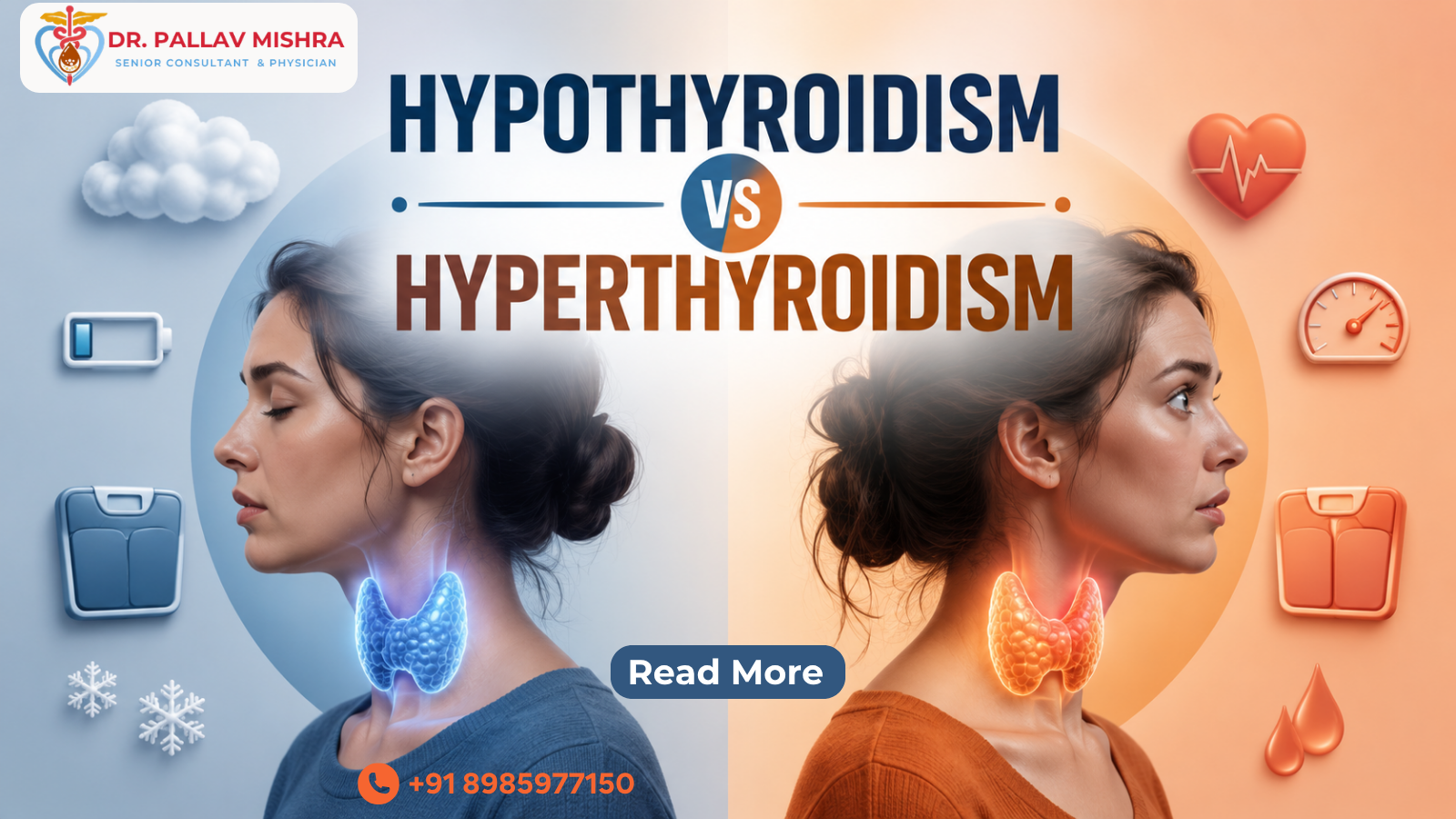
Feeling constantly tired, gaining weight for no clear reason, or on the flip side — jittery, sweaty, and losing weight without trying? Your thyroid could be behind it. This small, butterfly-shaped gland in your neck controls your metabolism, energy levels, heart rate, and even your mood. When it doesn't work the way it should, it can either slow down (hypothyroidism) or speed up (hyperthyroidism) — and the symptoms can look almost opposite to each other.
Let's break down what's actually happening in each condition, why it happens, and how doctors approach treatment differently for each.
What Is Hypothyroidism?
Hypothyroidism happens when your thyroid gland doesn't produce enough thyroid hormone. Since thyroid hormone essentially controls how fast your body's engine runs, low levels mean everything slows down.
Common symptoms include:
Constant fatigue and sluggishness
Unexplained weight gain
Feeling cold all the time
Dry skin and hair thinning
Constipation
Depression or brain fog
Irregular or heavy periods
Common causes:
Hashimoto's thyroiditis (an autoimmune condition where the immune system attacks the thyroid)
Iodine deficiency
Certain medications
Previous thyroid surgery or radiation treatment
What Is Hyperthyroidism?
Hyperthyroidism is the opposite — the thyroid produces too much hormone, pushing your body's systems into overdrive.
Common symptoms include:
Rapid or irregular heartbeat
Unexplained weight loss despite normal or increased appetite
Anxiety, irritability, or restlessness
Excessive sweating and heat intolerance
Tremors in the hands
Difficulty sleeping
Bulging eyes (in some cases, linked to Graves' disease)
Common causes:
Graves' disease (the most common cause, also autoimmune in nature)
Thyroid nodules that overproduce hormone
Excess iodine intake
Inflammation of the thyroid (thyroiditis)
Why the Symptoms Feel So Different
Think of your thyroid as the thermostat for your metabolism. Hypothyroidism is like the heating being turned too low — everything cools down, slows down, and feels heavy. Hyperthyroidism is the opposite — the heat is cranked up too high, and your body burns through energy faster than it should, leaving you wired, anxious, and running on empty.
Interestingly, both conditions can affect your heart, which is why thyroid issues are sometimes picked up during a routine checkup with a Best Hypertension specialist in Noida. When a patient comes in with an unexplained rise or irregularity in blood pressure and heart rate.
How Are They Diagnosed?
Both conditions are usually confirmed with a simple blood test that measures:
TSH (Thyroid Stimulating Hormone)
Free T3 and T4 levels
A high TSH with low T4 typically points to hypothyroidism, while a low TSH with high T4 suggests hyperthyroidism. Sometimes additional tests like a thyroid antibody panel or ultrasound are needed to pinpoint the exact cause, especially if an autoimmune condition is suspected.
This is why many people start with a consultation with the Best General Physician in Noida. A proper physical exam combined with the right blood work can quickly clarify which direction your thyroid is leaning, instead of guessing based on symptoms alone.
Treatment Differences
For Hypothyroidism: Treatment typically involves a daily synthetic thyroid hormone replacement (levothyroxine) to bring hormone levels back to normal. It's usually a long-term, well-managed routine with periodic blood tests to adjust dosage.
For Hyperthyroidism: Treatment options vary more widely and can include:
Anti-thyroid medications to reduce hormone production
Beta-blockers to manage rapid heart rate and anxiety symptoms in the short term
Radioactive iodine therapy to shrink an overactive thyroid
Surgery in select cases where nodules or gland enlargement are involved
Because hyperthyroidism often affects heart rate and blood pressure directly, patients are frequently monitored jointly by a general physician and a Best Hypertension specialist in Noida. Especially if palpitations or elevated blood pressure become persistent.
Why You Shouldn't Ignore the Symptoms
Both conditions, left untreated, can lead to serious complications — from heart problems and osteoporosis to fertility issues and, in rare severe cases, thyroid storm or myxedema coma. The tricky part is that early symptoms are often mistaken for stress, poor sleep, or just "getting older." That's exactly why an early, proper evaluation matters so much.
If you've been feeling off — whether it's unexplained fatigue, weight changes, or a racing heart — it's worth getting checked rather than waiting it out. Consulting the Best General Physician in Noida for an initial workup, and if needed, a Best Hypertension specialist in Noida. for heart-related symptoms, can help catch thyroid imbalances early, before they affect your quality of life.
The Bottom Line
Hypothyroidism and hyperthyroidism may sit at opposite ends of the same gland's malfunction, but both are highly treatable once properly diagnosed. Whether your thyroid is running too slow or too fast, the right combination of blood tests, medication, and follow-up care from the Best General Physician in Noida. With support from a Best Hypertension specialist in Noida. When your heart is involved — can get things back on track.
FAQs
1. Can hypothyroidism turn into hyperthyroidism?
Rarely, but some autoimmune thyroid conditions can shift over time.
2. Is thyroid disease more common in women?
Yes, women are significantly more likely to develop thyroid disorders than men.
3. Can thyroid problems affect blood pressure?
Yes, both hypo- and hyperthyroidism can raise or lower blood pressure and heart rate.
4. Is thyroid disease curable?
It's usually manageable long-term with medication rather than fully "cured."
5. How often should thyroid levels be checked?
Typically every 6–12 months once stable on treatment, or as advised by your doctor.
